
Will data centers become the electric utilities of the future?
The President just said they should. On October 21, Donald Trump wrote on Truth Social that "New and large, in some cases gigantic, Data Centers are mandated by me to make their own electricity, and give or sell any excess back to the local community, or grid."
Half of that is already happening. The other half is much harder than it sounds.
What the post said, and what it did not
The post did two things. It told large data centers to generate their own power and sell what they do not use. And it told developers to pay host communities a "dividend" to win support. "MAKE DEALS, and get them built!!!" he wrote.
It did not come with a rule. As of this writing there is no executive order, no agency proceeding and no statute behind the word "mandated." Most data centers still buy power through utility contracts overseen by state regulators, and the federal government does not set those terms.
That gap matters, because the federal regulator just drew the line in the other direction. Earlier this month, the Federal Energy Regulatory Commission rejected most of PJM's proposal to require new data centers on the country's largest grid to bring their own capacity or face curtailment first. FERC found the plan reached into retail electricity policy that the Federal Power Act leaves to the states, and that it treated large loads more harshly than reliability required.
So the push to make data centers self-supply now runs through two channels: political pressure from the top, and state rules from the bottom.
Data center power is already moving on site
The market did not wait for the post.
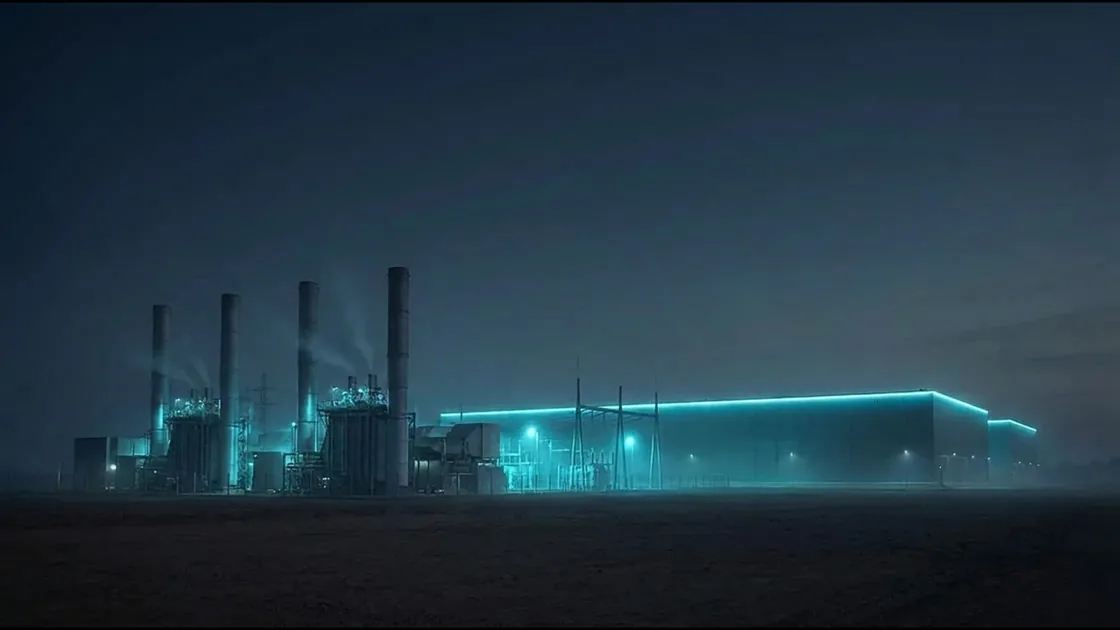
Energy research firm Cleanview reported on October 21 that data center developers have announced more than 100 gigawatts of their own power plants, up from about 90 gigawatts in June. Operating behind-the-meter capacity has nearly doubled since June. Capacity under construction has roughly quadrupled. Most of it is natural gas: simple-cycle turbines, reciprocating engines and combined-cycle plants.
The projects are getting bigger, too. At the GW Ranch site in West Texas, a 7.65 gigawatt gas plant is planned to power an off-grid AI data center for Amazon. Meta's Hyperion campus in Louisiana is being developed alongside new power plants that also connect to the local transmission system.
The reason is simple. Grid connections in many markets now take years. A developer with a tenant and a deadline cannot wait for the interconnection queue, so it builds the power plant itself.
Why a power plant is not a utility
Generating your own electricity makes a data center a power producer. Selling it to the public is what makes a company a utility, and that is a different business.
A utility has an obligation to serve every customer in its territory, at regulated rates, around the clock. It owns and maintains wires to homes it did not choose. Its returns are set by a commission.
The second half of the President's sentence, "give or sell any excess back to the local community," walks straight into that regime. As Travis Fisher of the Cato Institute told Reason, in most states a power plant owner that sells electricity to someone else becomes a public utility, even if the sale happens off the grid, and takes on the economic regulation that comes with it.
Hyperscalers want firm power at a known cost. Very few want rate cases, service territories and a state commission reviewing their margins. Expect data centers to build power plants and sell surplus into wholesale markets where the rules allow it. Do not expect Amazon to start billing households.
The "dividend" is not a sure thing either. This month, residents of Hazle Township, Pennsylvania, rejected a proposed Amazon Web Services campus whose developers had offered a $10,000 cash payment to every resident.
What changes for infrastructure investors
The question for allocators is not whether data centers become utilities. It is where the value lands once power moves on site.
- Siting follows fuel, not fiber. Self-supplied campuses go where gas pipelines, land and permits are available. West Texas and Louisiana look more like power markets than traditional data center hubs.
- Connectivity has to follow. An off-grid campus still needs long-haul fiber, diverse routes for redundancy and middle-mile networks to reach users and other data centers. Much of that is not built yet.
- Regulatory risk shifts to the states. With FERC deferring to state retail authority, the rules on self-supply, surplus sales and cost allocation will differ state by state. Underwrite the state, not the headline.
- Rewards go to physical position. The owners of rights-of-way, routes and local networks near these campuses gain a counterparty that needs them and cannot wait.
Where we sit
Standard consolidates independent broadband and telecommunications infrastructure across North America: fiber networks, fixed wireless operators and the assets around data centers and interconnect. Many of the places where data centers now build their own power plants are places the national carriers never prioritized. The networks that already serve them become part of the connective layer for what comes next.
We lay out the approach for allocators on our investors page.
Data centers will make their own power. Whoever owns the routes between those power plants and the rest of the network will set the terms.
General commentary on infrastructure markets. Not an offer to sell or a solicitation of an offer to buy any security, and not investment advice.